
Medical Air Technology | Tel: +44 (0)844 871 2100


Hertfordshire and West Essex ICB
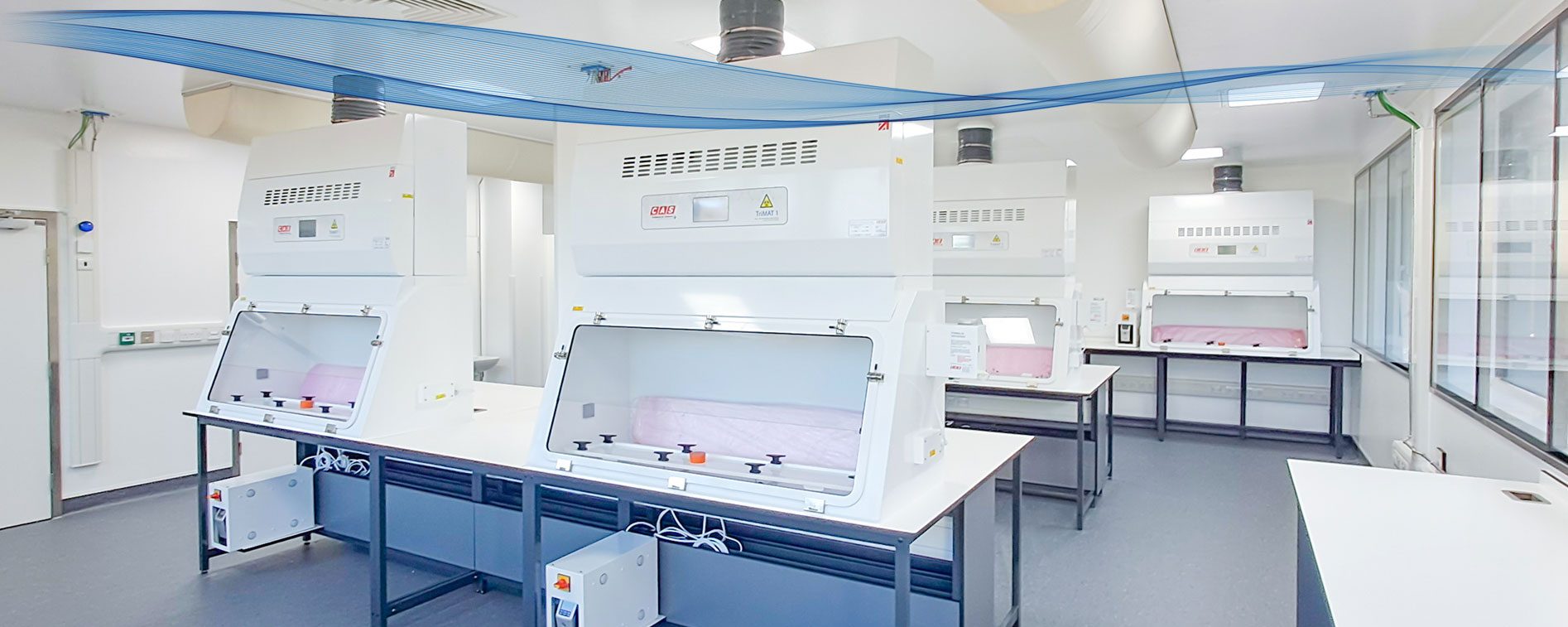
A new CL3 containment lab delivered by MAT is helping hospitals in Hertfordshire and West Essex provide a more efficient and sustainable centralised pathology service.
In his review of efficiency in hospitals, commissioned by the Department of Health to show how improved efficiency can be made by the NHS, the first point Lord Carter of Coles highlighted was that “the provision of high-quality clinical care and good resource management go hand-in-hand. All Trusts should therefore grasp the use of their resources more effectively.”
The establishment of the new shared pathology network is one example of how this is being achieved, in line with Lord Carter’s report and the resulting national programme initiated by NHS England. The shared pathology service is sustainable for hospitals, community services and GPs, and patients, and is an exciting stage in the drive towards improved efficiencies across all NHS facilities.
The hub required a Containment Level 3 (CL3) laboratory for processing pathology samples in order to protect staff, the public, and the environment from potentially infectious pathogens. For this part of their work, construction company Walter Lilly brought in MAT due to its proven track record and previous CL3 projects carried out with them. Some initial laboratory designs were provided to the MAT team, but they were subsequently reworked in what became a full design and build project.
A shared pathology laboratory
MAT has installed containment laboratories in some of the UK’s leading research departments, both in hospitals and universities. Recent clients include Imperial College London, the Brain Tumour Research Centre of Excellence at the University of Plymouth, the University of Bristol, and the London School of Hygiene and Tropical Medicine.
For this project, the scope covered:
- Corridor - The general circulation corridor provides access to the ante room. From here, users can view key facility parameters (room pressures, alarms) and operate the ventilation system into fumigation mode. Ingress to the lab is via an accessed controlled door. An electrical cupboard houses distribution and building management system hardware.
- Ante room - Accessed from a circulation corridor, the ante room forms the first stage of the biocontainment boundary. This area is for hand washing and gowning/de-gowning on entry or exit from the main laboratory spaces.
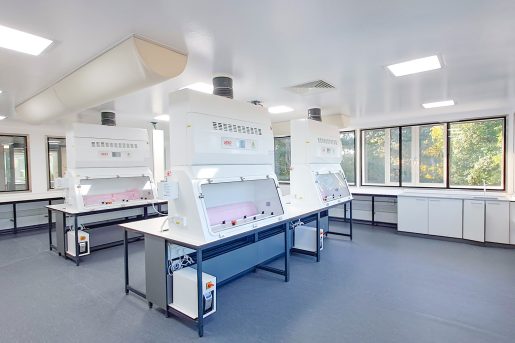
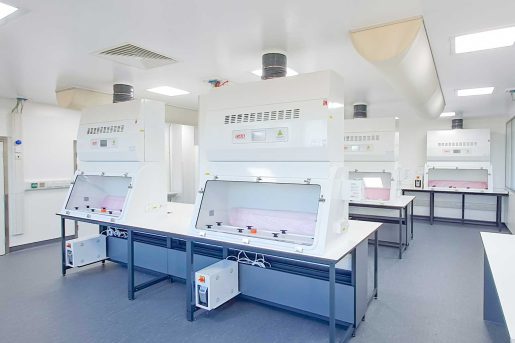
- CL3 laboratory - The main containment space is where the bulk of the operational activities take place. This room contains five Class I Microbiological Safety Cabinets, incubators and benching.
- Dark room - Ancillary process space accessed from the CL3 laboratory. This space provides benching, process equipment and a Class II microbiological safety cabinet
- Autoclave - Dedicated space for the waste disposal plant for high temperature sterilisation and pass-through to waste room. Also contains a sluice sink for wash-up activities.
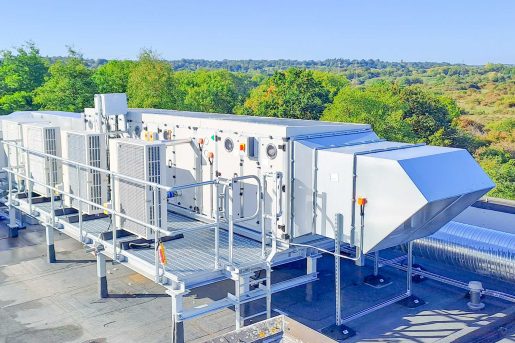
- Roof level location for the supply air handling unit, extract air plant, runaround pumps, condensers and motor control panels.
All work was completed in compliance with current standards and guidance including the HSE ACDP document Management, Design and Operation of Microbiological Containment Laboratories; and COSHH Control of Substances Hazardous to Health.
Project challenges
The client was particularly keen on maintaining a considerable area of glazing, which MAT had to ensure was installed to the suitable standards of sealability.
The laboratory was designed for and fumigated with chlorine dioxide, which is best practice and a first for MAT. Three successful fumigation efficacy tests were undertaken at the end of the commissioning period. The tests had to be undertaken in the dark overnight, as chlorine dioxide breaks down under UV light.
A specialist contractor
MAT designs, manufactures, and installs bespoke critical ventilation systems and turnkey project solutions for new build and refurbishment healthcare and life science projects. The team has extensive experience of working in live environments and fully understands the challenges around delivering a project within an operational scenario.
In addition, the company’s facilities management division, MAT FM, provides a range of competitively priced and highly effective service and maintenance packages for all core products and turnkey solutions offered by MAT or other suppliers, ensuring that equipment is maintained, serviced and validated correctly for optimum performance and efficiency.